
Last updated November 15, 2026
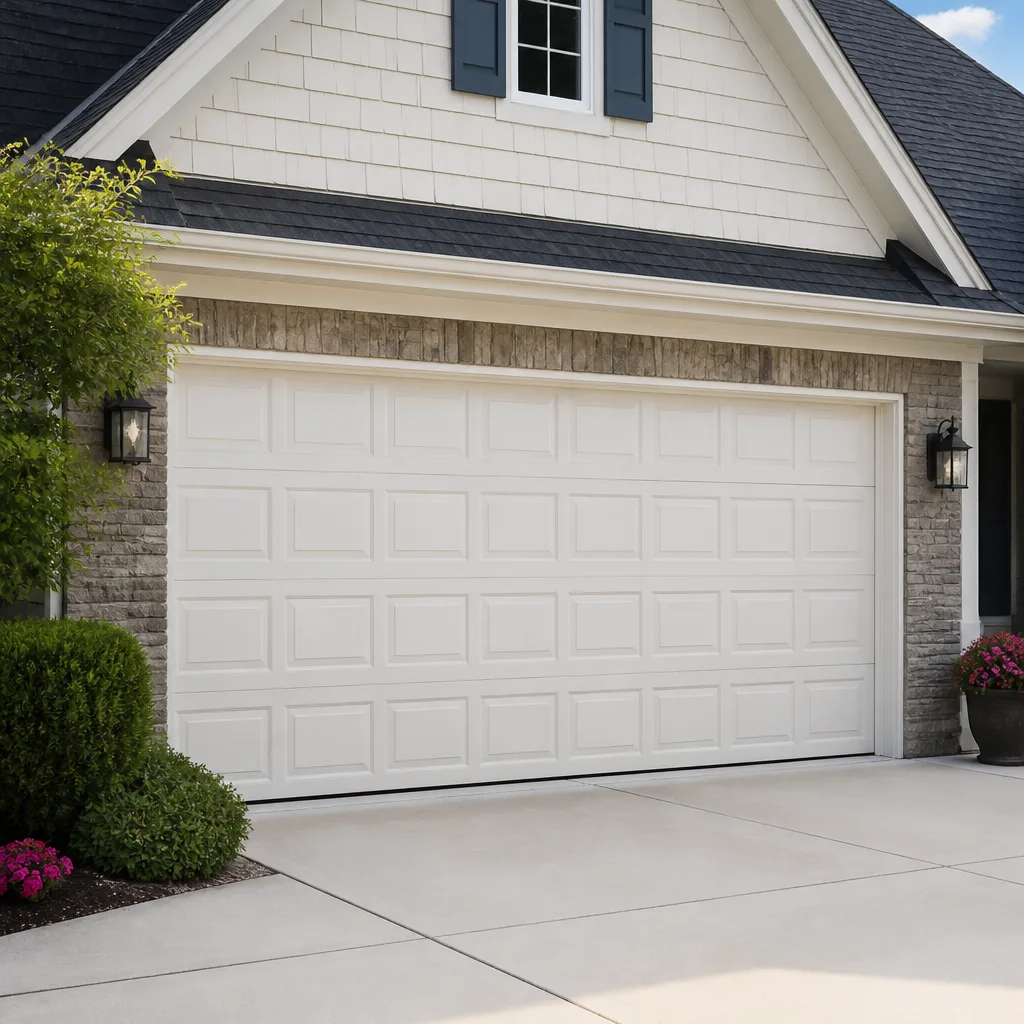 Raised-panel steel
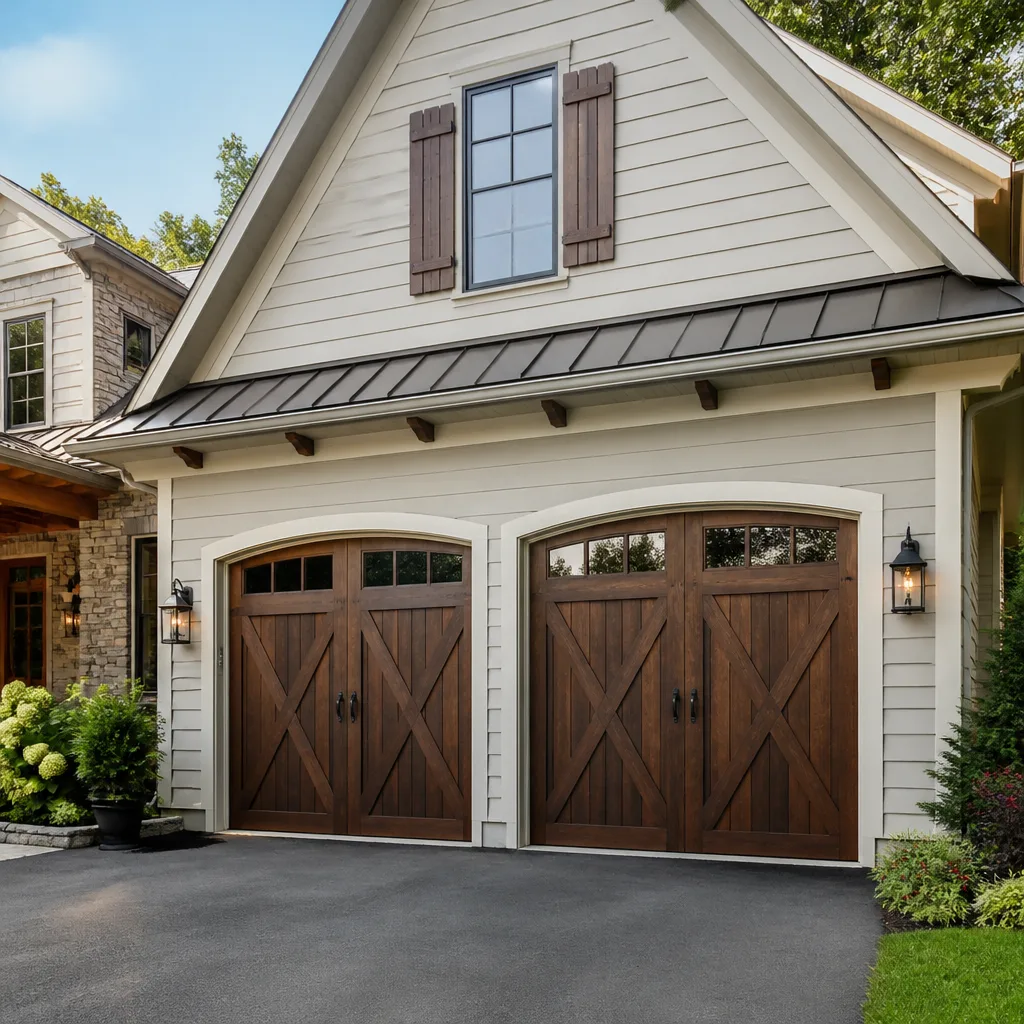 Carriage house
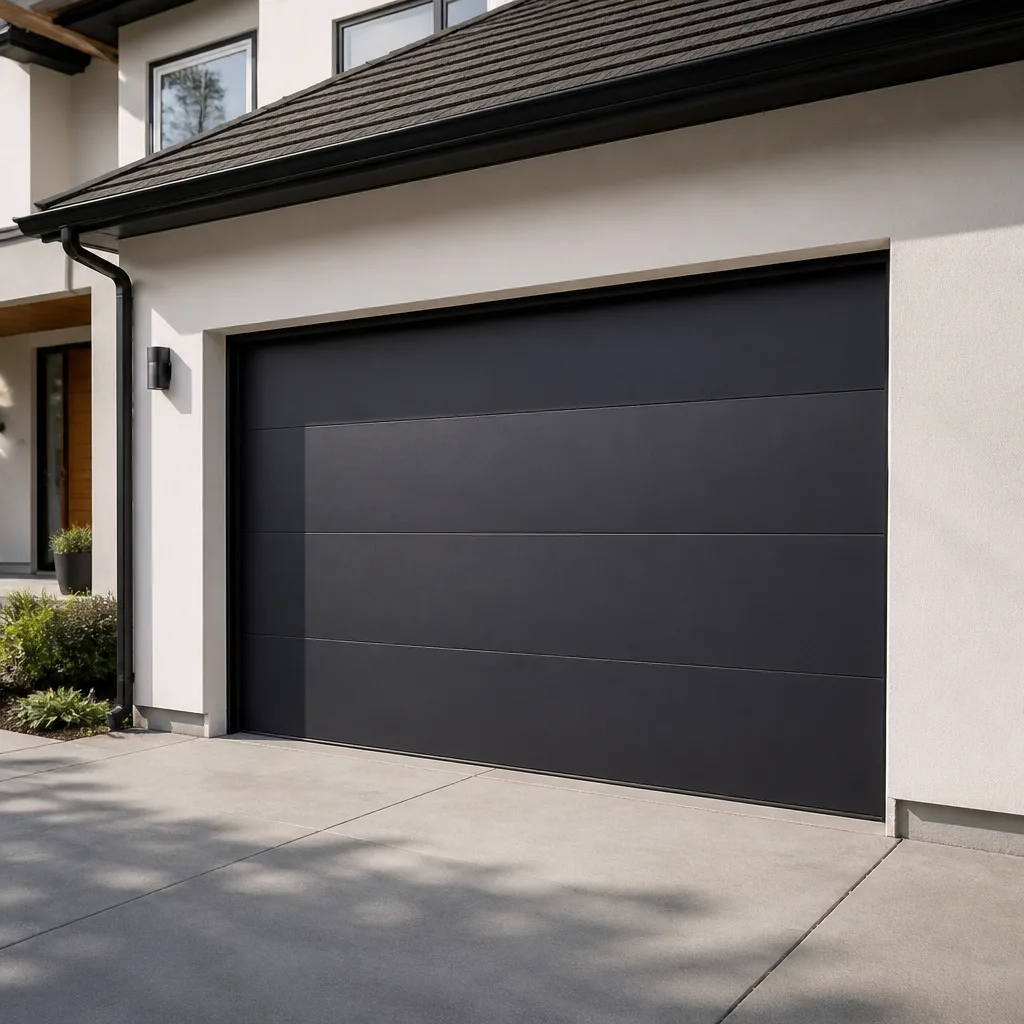 Modern flush
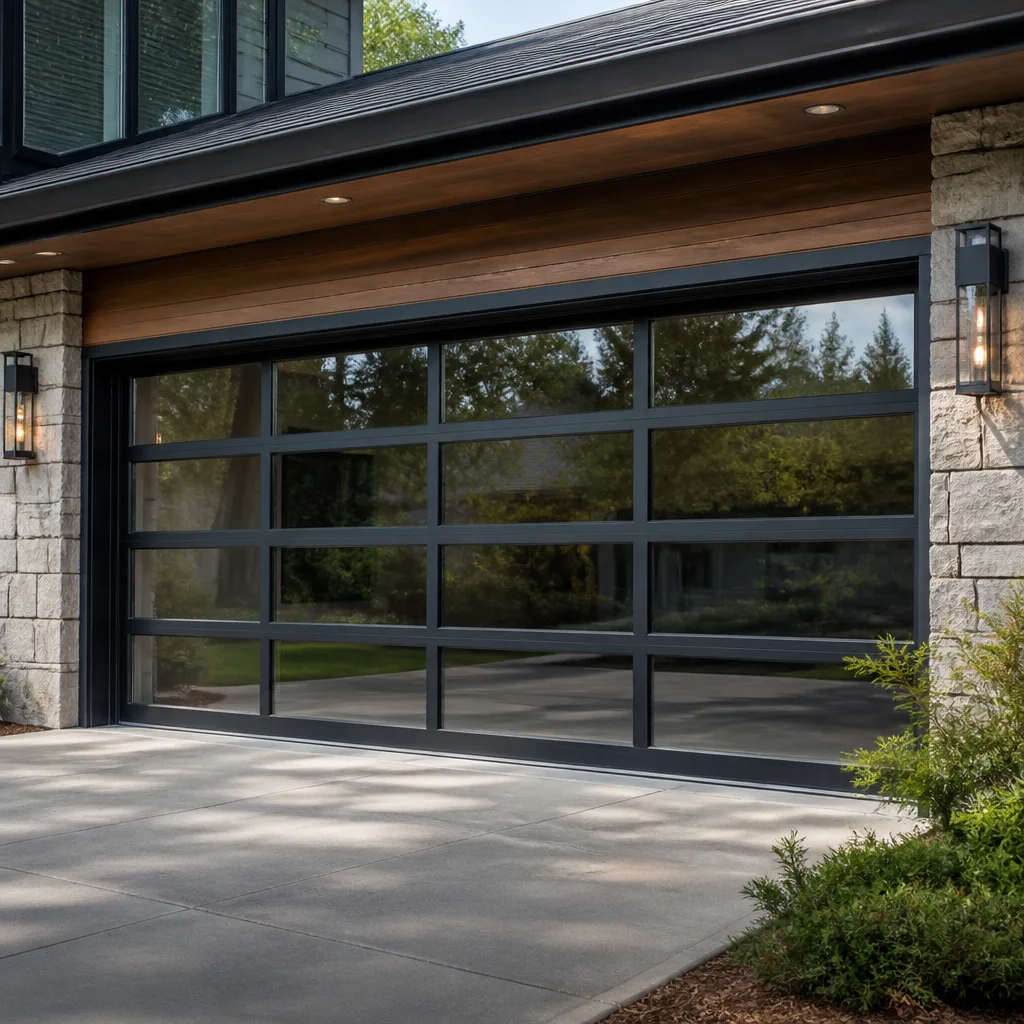 Full-view glass
 LiftMaster openers
 Chamberlain openers
Full 25-point door and opener safety check with every visit - springs, cables, rollers, tracks, and your LiftMaster or Chamberlain opener included
You get a price before we start. It does not change when the pro arrives.
Get your free estimateGarage Door Repair Troubleshooting in Arvada: Common Problems and How to Fix Them
A garage door that reverses before closing and a garage door that won’t move at all look like the same problem from the driveway. They aren’t. One is usually a sensor or logic fault that costs almost nothing to correct. The other can point to a broken torsion spring, a snapped cable, or a dead opener capacitor, and confusing the two is how homeowners end up paying for the wrong repair. The good news is that garage doors fail in predictable patterns, and matching the symptom to the subsystem narrows the cause fast. This guide walks Arvada homeowners through that diagnosis, the safety checks worth running before you call anyone, and the exact point where troubleshooting should stop and a technician should start.
Quick Answer
Most garage door problems in Arvada fall into one of five mechanical categories: springs, cables, tracks and rollers, opener logic and electronics, or safety sensors. Reversing doors, blinking opener lights, and doors that close partway and stop are almost always sensor or opener problems. Grinding, sagging, crooked travel, and doors that won’t lift by hand point to springs, cables, or track alignment. Anything involving a broken spring or a loose bottom bracket cable is a stop-work situation for a trained technician, not a homeowner repair.
Styles & brands we work with
- Raised-panel steel
- Carriage house
- Modern flush
- Full-view glass
- LiftMaster openers
- Chamberlain openers
Table of Contents
- The Five Systems That Cause Nearly Every Garage Door Problem
- Symptom-to-System Map: What Each Behavior Actually Means
- The Safe Test Sequence to Run Before You Call Anyone
- Why Front Range Temperature Swings Cause Seasonal Garage Door Problems
- Brand-Specific Quirks: LiftMaster, Chamberlain, Genie, and Craftsman
- The Two Repairs You Should Never Attempt Yourself
- How to Tell If the Problem Is the Opener or the Door
- What Drives the Cost of a Repair vs. a Replacement
The Five Systems That Cause Nearly Every Garage Door Problem
Every residential garage door on the market, from a builder-grade Raynor to a newer Clopay insulated door, is a balance between five systems. When one fails, it usually produces a signature set of symptoms. Learning those signatures is the whole game.
- Torsion or extension springs. Springs carry the door’s weight. When one breaks, the door becomes dangerously heavy and often won’t lift more than a foot. A loud bang from the garage is the classic tell.
- Cables and bottom brackets. Cables run from the bottom corners up to the drums or extension springs. They keep the door level. A cable that jumps a drum or frays makes the door hang crooked or bind.
- Tracks and rollers. The track guides the door; rollers ride inside it. Bent track, worn nylon rollers, or a loose hinge cause grinding, scraping, and jerky travel.
- Opener electronics and logic. The motor, capacitor, logic board, travel limits, and force settings live here. Symptoms include the motor humming without moving the door, erratic stopping, or the opener that runs but the door doesn’t budge because the carriage is disconnected.
- Safety sensors and photo-eye system. The two small lenses near the floor. Misalignment, dirt, sun glare, or a bad wire causes the door to reverse immediately or refuse to close at all.
We work on all five systems every week, and in our experience the split is roughly even between mechanical problems (springs, cables, tracks) and electronic ones (openers, sensors). That’s why Arvada Garage Door Service treats opener diagnosis as its own discipline rather than an afterthought. If you can name which of these five systems is misbehaving, you already know whether you’re facing a small part or a larger job.
Symptom-to-System Map: What Each Behavior Actually Means
This is the section to screenshot. Match your door’s behavior to the middle column, and you’ll have a strong idea of which system is responsible before anyone arrives.
| Symptom | Most Likely System | Typical Complexity |
|---|---|---|
| Door reverses before touching the floor | Safety sensors or limit settings | Low – adjustment or sensor replacement |
| Door won’t move at all, opener light blinks | Opener logic, sensor fault, or locked-out travel | Low to moderate |
| Motor hums but door doesn’t move | Opener capacitor, stripped gear, or disconnected carriage | Moderate |
| Loud bang, door heavy, lifts only a foot | Broken torsion or extension spring | High – professional only |
| Door hangs crooked, one side lags | Cable off the drum or broken spring on one side | High – professional only |
| Grinding or scraping as door travels | Rollers, hinges, or bent track | Moderate |
| Door opens slowly or strains | Spring tension loss, worn rollers, or failing opener | Moderate |
| Door closes partway then reverses | Obstruction, sensor, or force setting | Low |
Notice the pattern. The low-complexity items cluster around sensors and settings. The high-complexity items cluster around springs and cables. Everything in the middle is usually a worn part that’s straightforward to replace once it’s identified.
One more thing worth flagging for Arvada homeowners with older homes: a door that “suddenly” strains on cold mornings often isn’t an opener problem at all. It’s a spring that has lost tension gradually and only shows its weakness when the metal contracts. We’ll get to that in the climate section below.
The Safe Test Sequence to Run Before You Call Anyone
You can rule out a surprising number of causes yourself, safely, in about ten minutes. Follow these steps in order and stop at the first anomaly. If you reach the end with no clear answer, that’s useful information too.
- Check the sensors first. Look at both photo-eye lenses near the floor. Wipe them clean. Confirm nothing is blocking the beam (a stray leaf, a recycling bin, a broom handle). Check that the small indicator lights on each sensor are lit and steady, not flickering.
- Look for an obvious obstruction. With the door open, inspect the tracks for debris, packed snow, or a dropped tool. If you’re in Arvada during a cold snap, check for ice at the threshold.
- Run the manual disconnect test. Pull the red release handle hanging from the opener carriage. This detaches the door from the opener so you can test the door by itself. Do this only with the door in the fully closed position.
- Run the balance test. With the door disconnected, lift it by hand to about waist height and let go. A properly balanced door should stay roughly where you release it. A door that drops fast means the springs have lost tension. A door that’s extremely heavy to lift by hand means spring failure. Stop here if either happens. Do not attempt to lift a heavy door repeatedly.
- Reconnect the carriage. Pull the release handle again to re-engage the opener, or run the opener one cycle so the carriage re-locks.
- Watch one full open-and-close cycle from the side. Note any grinding, hesitation, crooked travel, or reversing. Write down what you see. This is what you’ll describe when you call.
The clear stop point: if the balance test reveals a heavy door or one that drops fast, do not attempt to fix the springs yourself. That’s the line between troubleshooting and dangerous work. Everything before that point is fair game.
If the balance test comes back clean and the door still misbehaves, the problem is almost certainly in the opener or the sensors, and that’s the point where a quick diagnosis call to garage door opener repair saves you a lot of guessing.
Why Front Range Temperature Swings Cause Seasonal Garage Door Problems
This is where Arvada-specific knowledge matters. The Front Range sits at the edge of the mountains and gets big daily and seasonal temperature swings. A January day in Arvada can start near 15 degrees and climb into the 50s by afternoon. That kind of swing is hard on metal.
Torsion springs are wound steel under significant load. When temperatures drop, steel contracts slightly and the spring’s stored energy changes with it. Colder temps also make the grease inside the spring coils stiffer, which adds resistance to the door’s travel. The combined effect is that a spring that was only slightly weakened during the milder months can fail outright on the first hard cold snap of the season. That’s why garage door failures in Arvada cluster in late fall and early winter.
The same contraction affects other systems too:
- Track alignment. The metal tracks expand and contract at different rates than the wood or steel framing they’re mounted to. Loose lag bolts let the track shift a fraction of an inch, which is enough to make rollers bind.
- Seals and weatherstripping. The bottom rubber seal hardens in the cold and can crack. A hardened seal can also trip the door’s force reversal on the way down.
- Roller bearings and hinges. Cold temps thicken the lubricant in the rollers. A door that needs fresh lubrication on the rollers and hinges is more noticeable in winter than summer.
- Opener gear and lube. The plastic gears in a Chamberlain or Genie unit are less forgiving in cold. A worn gear that functions on a summer afternoon can strip on a cold morning.
Homeowners who moved to Arvada from a milder climate often tell us their old garage door lasted years at their previous house and started acting up here in a couple of seasons. It’s not imagination. The daily freeze-thaw cycle and the dry high-altitude air genuinely accelerate wear on the mechanical parts. Seasonal inspection in the fall, before the first freeze, catches most of these problems early.
Brand-Specific Quirks: LiftMaster, Chamberlain, Genie, and Craftsman
Openers use different languages to tell you what’s wrong, and reading those signals correctly saves a call or narrows the diagnosis fast. Here’s how the four most common brands in Arvada homes (LiftMaster, Chamberlain, Genie, and Craftsman) report problems, and what the signals usually mean in plain terms.
LiftMaster error codes
LiftMaster units with a wall-mounted control panel typically show numbered error codes. A code pointing to an obstruction means the sensors see something in the path. Repeated codes indicate sensor alignment or wiring. LiftMaster’s MyQ-enabled openers sometimes log a code when the Wi-Fi feature conflicts with a hardwired wall control. The fix is usually a control board reset or a sensor re-aim, not a full replacement.
Chamberlain blink patterns
Chamberlain openers (which share engineering with LiftMaster under the same parent company) use light-blink counts. Counting the blinks is the whole diagnosis. If the main light blinks a set number of times, pauses, and repeats, that count corresponds to a specific fault in the manual. The most common ones relate to sensor wiring and force limits. If your Chamberlain runs one blink sequence on a Saturday morning, note the count and call – we can often interpret it on the phone before scheduling a visit.
Genie LED behavior
Genie units, especially the newer models, use the LED on the wall control and the main unit to signal state. A solid LED usually means normal operation; a rapid pulse or a repeating pattern signals a travel-limit or sensor fault. Genie openers are also known for their specific travel-limit reset procedure, which differs from LiftMaster and Chamberlain. If the travel limits got knocked out (common after a power surge or a hard door slam), resetting them by the book fixes the door without any parts.
Craftsman opener quirks
Older Craftsman openers (still common in Arvada homes built in the 1990s and 2000s) use the same blink patterns as Chamberlain, since they were manufactured by the same company for Sears. The tricky part is that older Craftsman wall controls often don’t display error info the way newer units do. Diagnosis on these usually requires watching the logic board LEDs directly during a cycle.
Because we’re brand-agnostic and work on all of these (along with Raynor, Clopay, Amarr, and Wayne Dalton doors), we don’t have a reason to steer you toward one brand over another. If your Craftsman is repairable, we’ll repair it. If the logic board is gone and a new opener makes more sense, we’ll say so – and tell you why.
The Two Repairs You Should Never Attempt Yourself
We’re not going to pretend everything on a garage door needs a professional. Changing a light bulb on the opener, cleaning the sensors, lubricating the rollers and hinges, and resetting the travel limits are all fair game for a handy homeowner. But two repairs have genuinely hurt people who tried them, and it’s worth understanding why before you decide to attempt them.
Torsion spring replacement
A torsion spring is a wound steel bar holding hundreds of pounds of stored energy in a housing directly above the door. When a spring is under tension, it’s holding the entire weight of the door in balance. To replace it, a technician has to unwind the spring in a controlled way using specific winding bars. If the bar slips out of the hole during winding, or if a homeowner uses a screwdriver or a random piece of pipe in place of a winding bar, the tool can get flung out with enough force to break a wrist or worse. This is the single most dangerous part on a residential garage door, and there’s no safe way to shortcut it. A broken spring is a call-a-professional repair.
Bottom bracket cable work
The bottom bracket is the metal plate at each bottom corner of the door that anchors the cable. It’s under continuous tension from the spring. If you try to release the cable from the bracket or re-tension a slipped cable without first locking down the spring, the bracket and cable can snap back with significant force. Cable and bottom-bracket work has injured experienced tradespeople who got careless. Homeowners with no training are at much higher risk. A loose or frayed cable is also a call-a-professional repair.
Everything else – a bent track segment, a worn roller, a noisy hinge – is usually safe to tackle carefully if you’re reasonably handy. The dividing line is stored energy. If the part you’re working on is holding a spring’s tension, stop. Call garage door repair and we’ll handle it safely.
How to Tell If the Problem Is the Opener or the Door
The single most useful diagnostic skill is separating “opener problem” from “door problem.” It’s also where most homeowners get stuck, because the door and the opener interact in a way that makes the symptom look the same. Here’s the shortcut: run the balance test from the safety section. If the door is heavy or drops fast when disconnected, the problem is mechanical (springs, cables, or rollers), not the opener. If the door balances properly and moves easily by hand but the opener won’t run it, the problem is in the opener or its electronics.
Common opener-side symptoms:
- Opener hums but door doesn’t move. Usually a failed capacitor or a stripped drive gear.
- Door moves a few inches then stops. Travel limits got knocked out or the force setting is too low for the door’s weight.
- Wall control works but remotes don’t (or vice versa). Usually a radio or logic issue, not a door mechanical issue.
- Door opens fine but won’t close. Nine times out of ten, it’s a sensor problem, not the motor.
- Everything dead, no lights, no response. Power supply, logic board, or a broken wire between the opener and the wall control.
If you can run the disconnect test and note the result along with the opener’s specific behavior, you give us enough to book the right technician and the right part on the first visit. That’s the advantage of a specialist who works on all the major brands – we’re not learning your LiftMaster or your Genie on the job.
What Drives the Cost of a Repair vs. a Replacement
Garage door work lands in two buckets: repair or replace. Deciding which usually comes down to door age, the cost of the failed part, and how many parts are worn at once. Here’s the honest breakdown of what pushes cost up or down.
- Single failed part on an otherwise-sound door: Lowest cost. A sensor, a roller set, a hinge, or an opener capacitor is a fast, contained fix.
- Spring replacement: Higher cost than a sensor, and usually springs are replaced in a matched pair rather than one at a time, since a matched set wears evenly.
- Cable or bottom bracket repair: Moderate to higher cost, because the spring has to be relieved to work safely, then re-tensioned after the cable is replaced.
- Opener logic board or drive gear replacement: Often more economical to repair than to replace on a newer unit, but on an older opener the parts can approach the cost of a new opener. We’ll give you both numbers and let you choose.
- Track replacement: Moderate cost, often rolled into a repair if the track was bent by a vehicle or a hard hit.
- Full door replacement: Only when the door panels are structurally damaged, when rust has compromised the struts, or when repeated repairs on the same door start adding up. A cosmetic upgrade is a separate decision.
What we don’t do is pad the estimate by recommending a replacement when a repair makes sense, or by delaying a repair that a new door would actually fix. Because we service and install doors from Clopay, Amarr, Wayne Dalton, and Raynor side by side, we’re not incented to push any one product. The recommendation comes from your door’s condition, not from what’s on the truck.
Common Mistakes to Avoid
- Assuming every stuck door is an opener problem. In our experience, roughly half of the “opener won’t lift the door” calls we get are actually spring problems. Diagnose the door by hand first with the balance test.
- Replacing sensors before checking the wiring. A new sensor on a bad wire still won’t work. Check that the wire from each sensor to the opener head is intact and the terminals are clean before spending money on parts.
- Forcing a misaligned door through a cycle. A door that’s hanging crooked means one side is binding. Running it repeatedly wears the opener gear and can bend the track worse. Stop and diagnose.
- Spraying WD-40 on the springs as “lubrication.” Torsion springs need a specific garage door lubricant, not a light penetrating oil that evaporates. WD-40 does more harm than good on the springs and rollers.
- Ignoring a garage door that’s noisy in Arvada’s cold months. A door that grinds or squeals more in winter is telling you the rollers or hinges need service. Small fixes now prevent spring failures later.
- Attempting to adjust the force setting by cranking it max. This makes the door operate with the safety reversal weakened. If the door needs more force to close, the underlying binding or spring issue is the real problem.
- Assuming a Saturday failure means a Saturday repair. We’re closed on Saturdays. If your door fails on a Saturday, call and we’ll book you for Sunday. We answer 24/7, and dispatch runs Sunday through Friday, 7am to 7pm.
See the difference
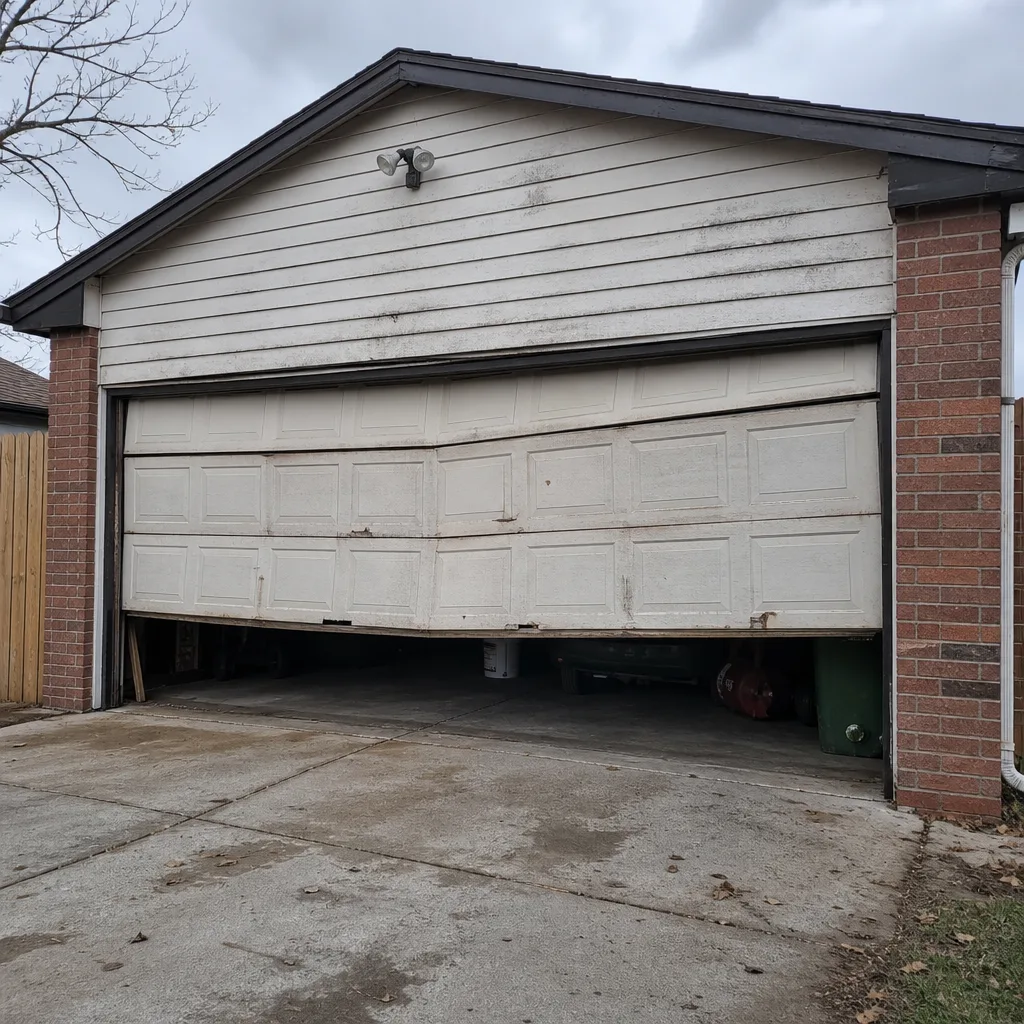 Before
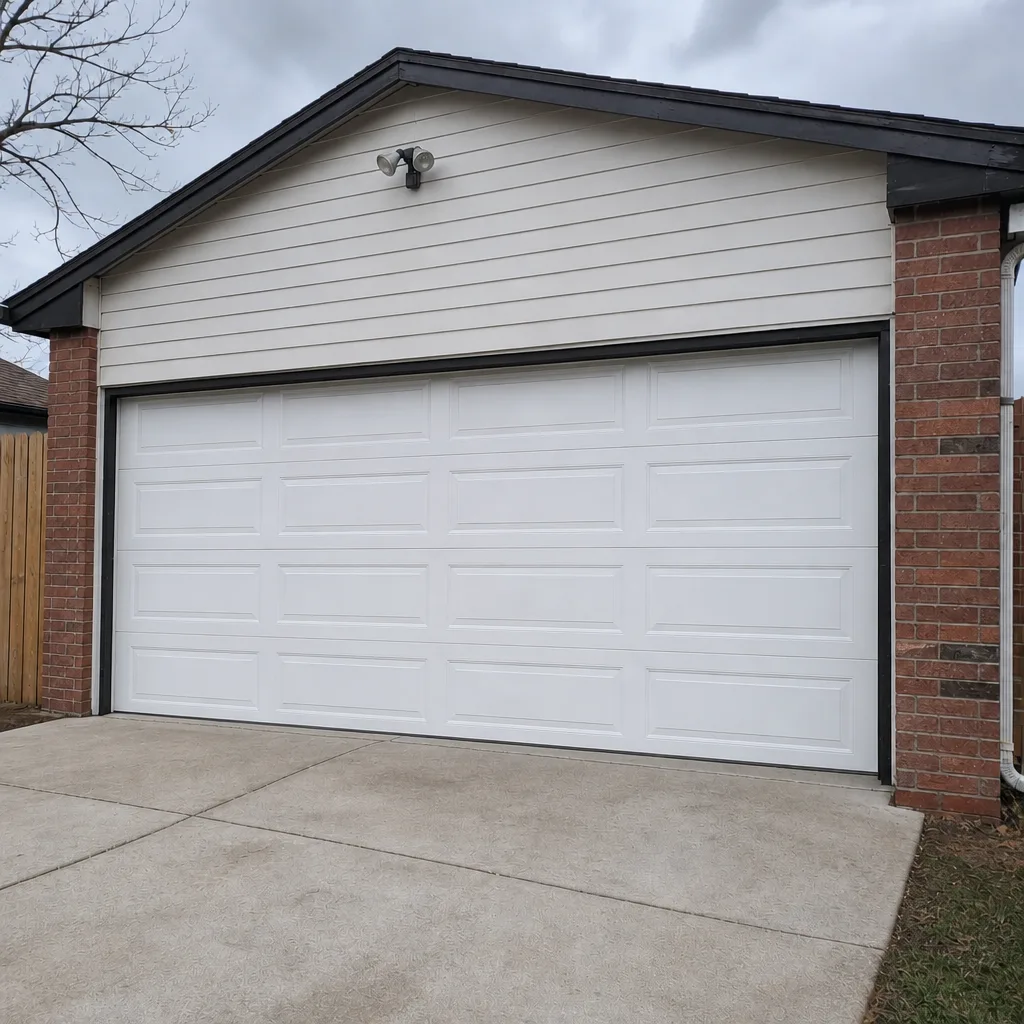 After
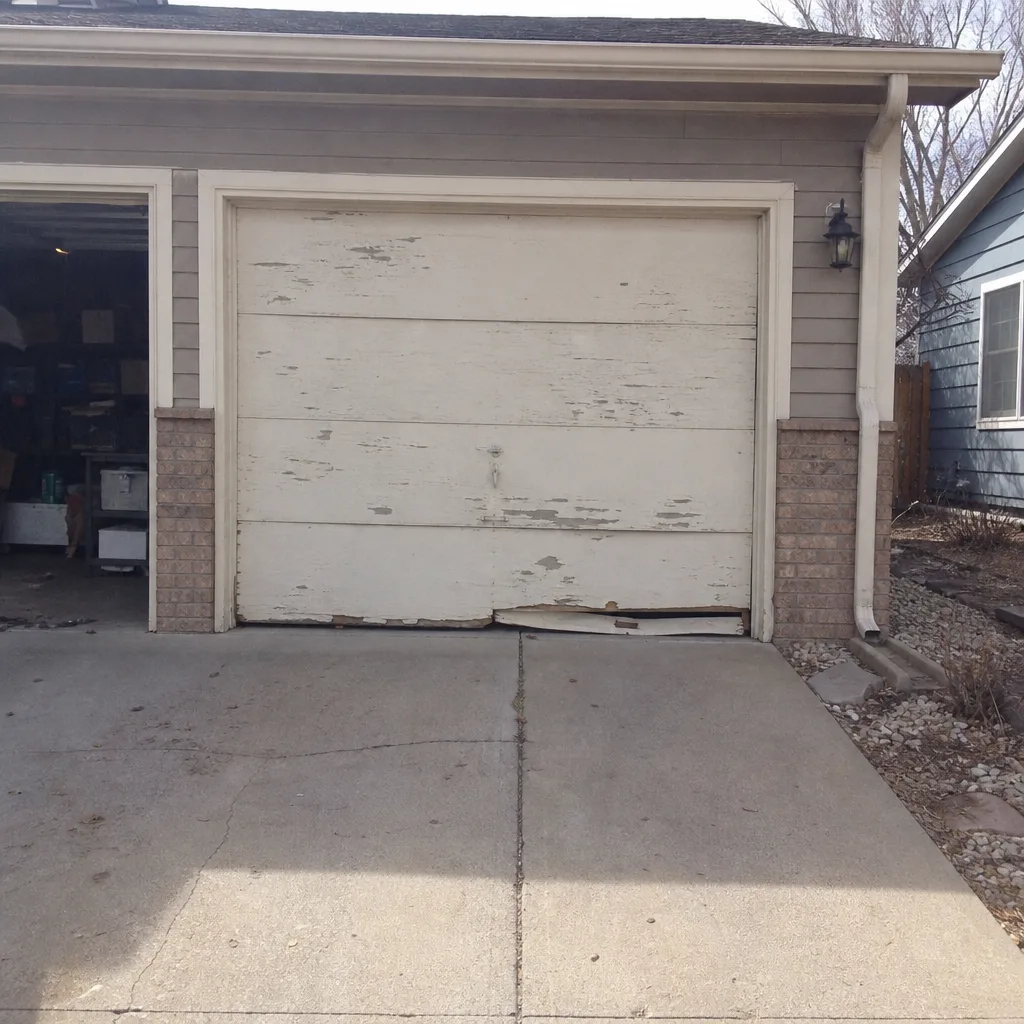 Before
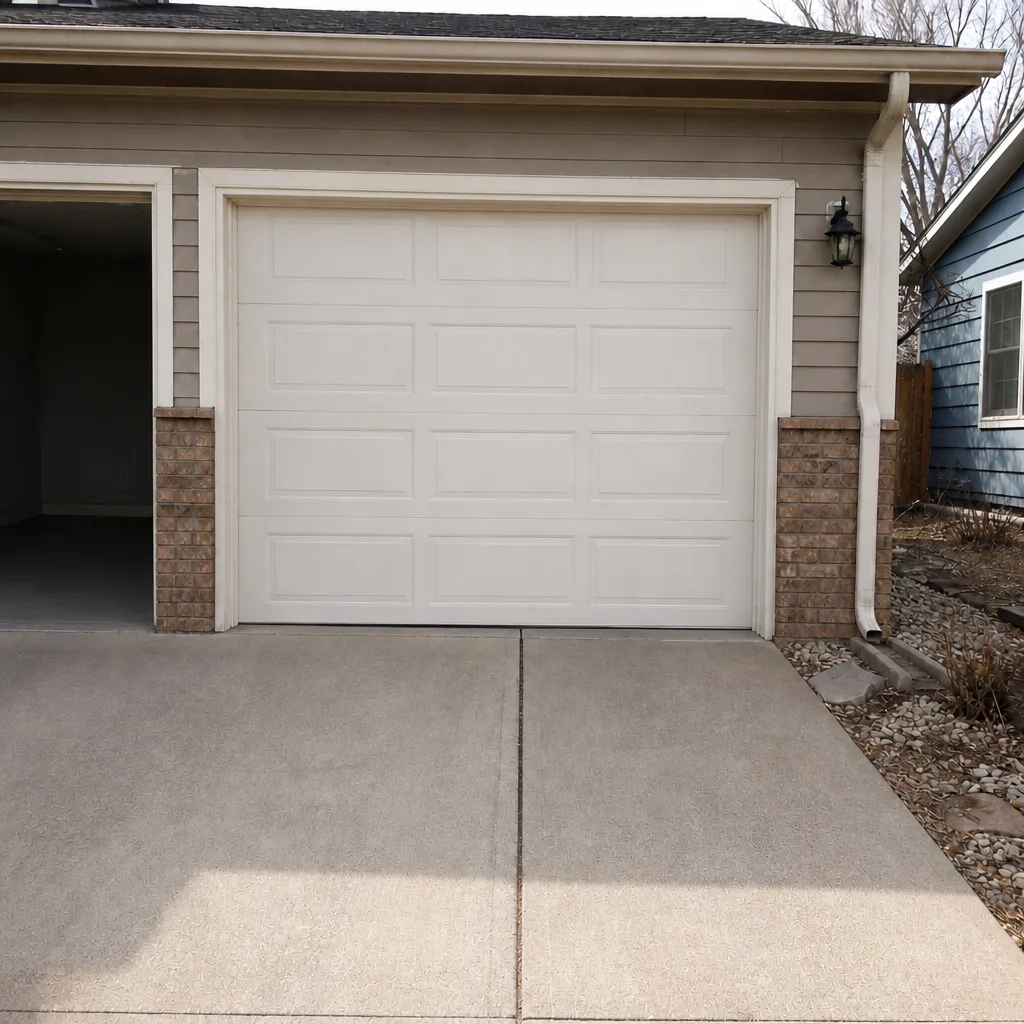 After
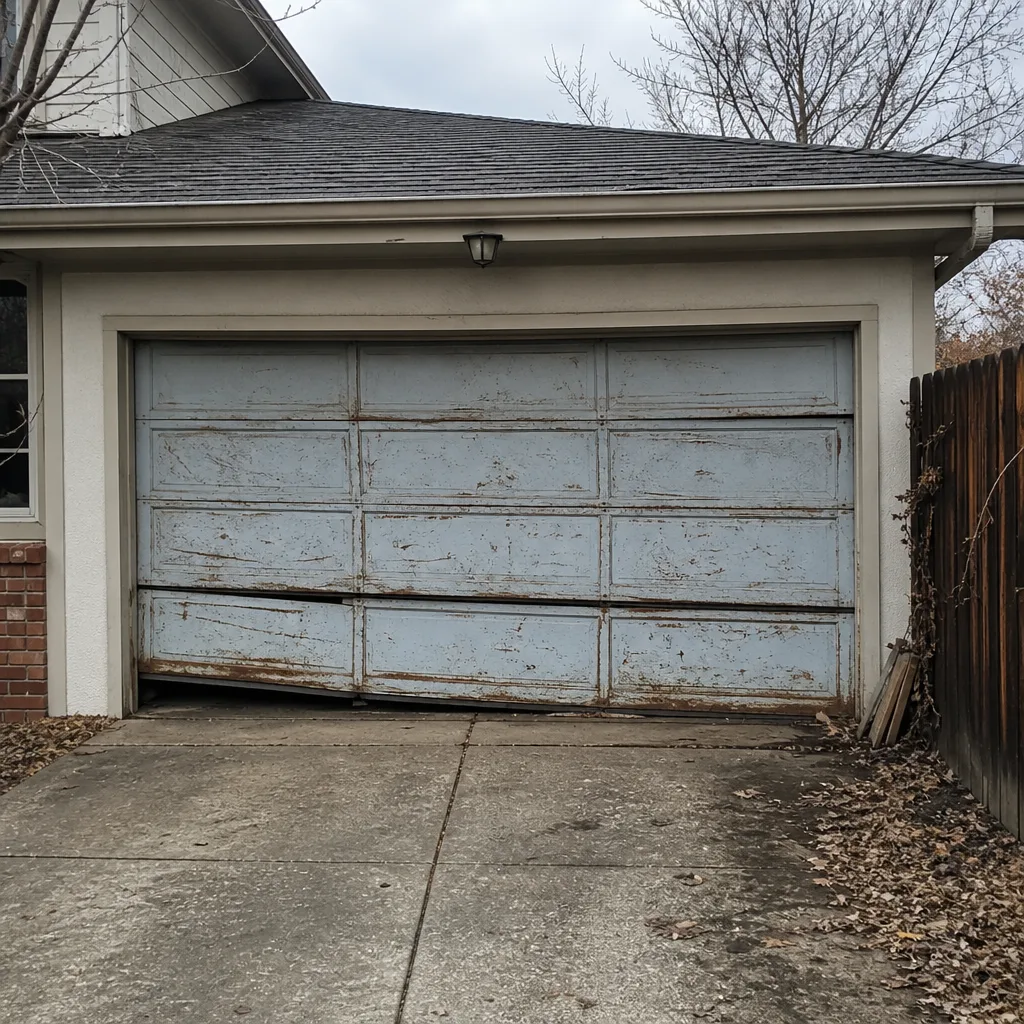 Before
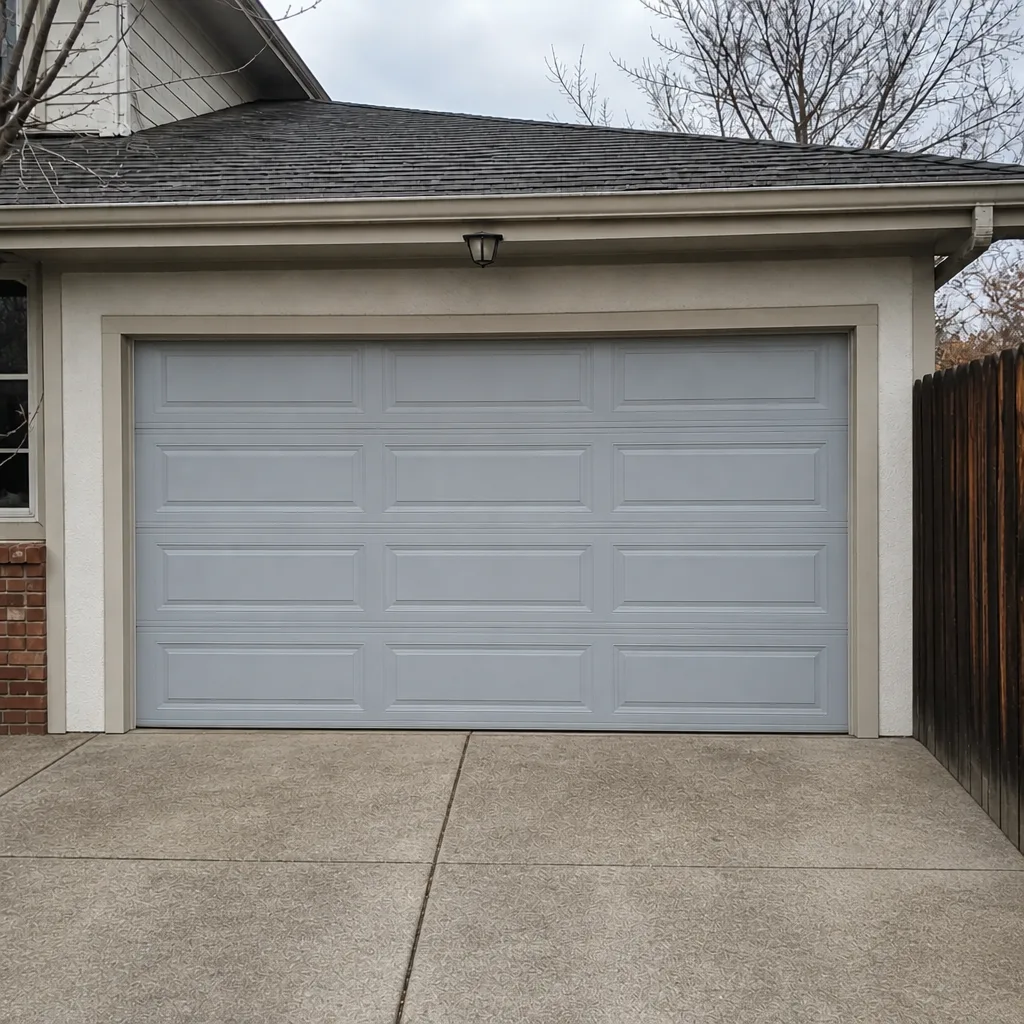 After
When to Call a Professional
Call us when the balance test shows a heavy door, when you hear a loud bang from the garage, when the door hangs crooked, when a cable looks loose or frayed, or when the opener hums without moving the door. Also call if you’ve run through the safe test sequence and still don’t have a clear answer – sometimes the fault is in a wire or a logic board that isn’t visible without opening the housing.
Arvada Garage Door Service offers free estimates in Arvada – call (866) 984-9695. We answer 24/7. Fast dispatch from 7am to 7pm, Sunday through Friday. Our technicians have up to 8 years of experience across LiftMaster, Chamberlain, Genie, Clopay, Amarr, Wayne Dalton, Craftsman, and Raynor systems, and our written estimate is the price. Whatever we find, you’ll know what it costs before we start.
Frequently Asked Questions
Your door reverses before closing because the safety sensor system thinks it detects an obstruction. The most common causes are misaligned sensors, dirt or a spider web on the lens, a wire that’s been nicked or pulled loose, or a sunlight glare hitting the receiving sensor. Check that both sensor lenses are clean, that the indicator lights on both are lit, and that nothing is between them. If that doesn’t fix it, the sensors or the wiring likely need replacing. Call (866) 984-9695 for an exact quote – estimates are free.
Spring repair is priced per spring, and since springs almost always wear as a matched pair, most jobs involve replacing both at once. The exact price depends on your door’s weight and spring type, and the written estimate you get before work starts is the final number. We don’t add fees or adjust the price after the estimate is agreed. Call (866) 984-9695 for a free estimate.
Yes, in most cases. A door that won’t close is usually a sensor or opener fault, and it’s the kind of fast diagnosis we handle same-day. Call (866) 984-9695. We answer 24/7. If you call outside dispatch hours, we’ll book you into the next opening, Sunday through Friday, 7am to 7pm.
Cold-weather noise is normal in Arvada, but the volume tells you something. Roller bearings thicken with cold, and the metal track contracts slightly, which makes contact points noisier. If the door is only noisy when it’s very cold, fresh lubrication on the rollers, hinges, and springs usually quiets it down. If it’s loud year-round, worn rollers or a misaligned track need attention. Call (866) 984-9695 for an exact quote – estimates are free.
No. Torsion springs hold hundreds of pounds of stored energy directly above the door, and releasing that energy incorrectly can seriously injure you. This isn’t a liability disclaimer – it’s the reason spring replacement is the one repair we won’t talk a homeowner through over the phone. Bottom bracket cable work falls into the same category. If your balance test shows a spring problem, stop and call a professional. Call (866) 984-9695 for an exact quote.
No, not once you’ve agreed to a written estimate. We identify the failing system before quoting so the number we give you reflects the actual work. The only thing that changes a price is if you ask us to do additional work beyond what was quoted. Our estimates are free in Arvada and across the Front Range.
The Bottom Line
Garage door problems are diagnosable. Match the symptom to one of five systems – springs, cables, tracks and rollers, opener electronics, or safety sensors – and you’ll know whether you’re facing a small part or a professional repair. Run the safe test sequence: check the sensors, disconnect the opener, run the balance test, reconnect, and watch one cycle from the side. Stop at the first sign of a heavy door or a broken spring. Everything below that line is fair game for a homeowner; everything above it is a call to a specialist. For Arvada homes on the Front Range, add seasonal maintenance to the list so the cold snaps don’t take a spring by surprise.
If you’ve done the tests and want a professional read on it, call Arvada Garage Door Service at (866) 984-9695. We answer 24/7. Fast dispatch from 7am to 7pm, Sunday through Friday. Free estimates, written pricing before work starts, and no guesswork – we know your brand and your system before we arrive.
For Arvada homeowners who want a specialist rather than a generalist, that’s the difference.
Written by the team at Arvada Garage Door Service.