
Last updated November 15, 2026
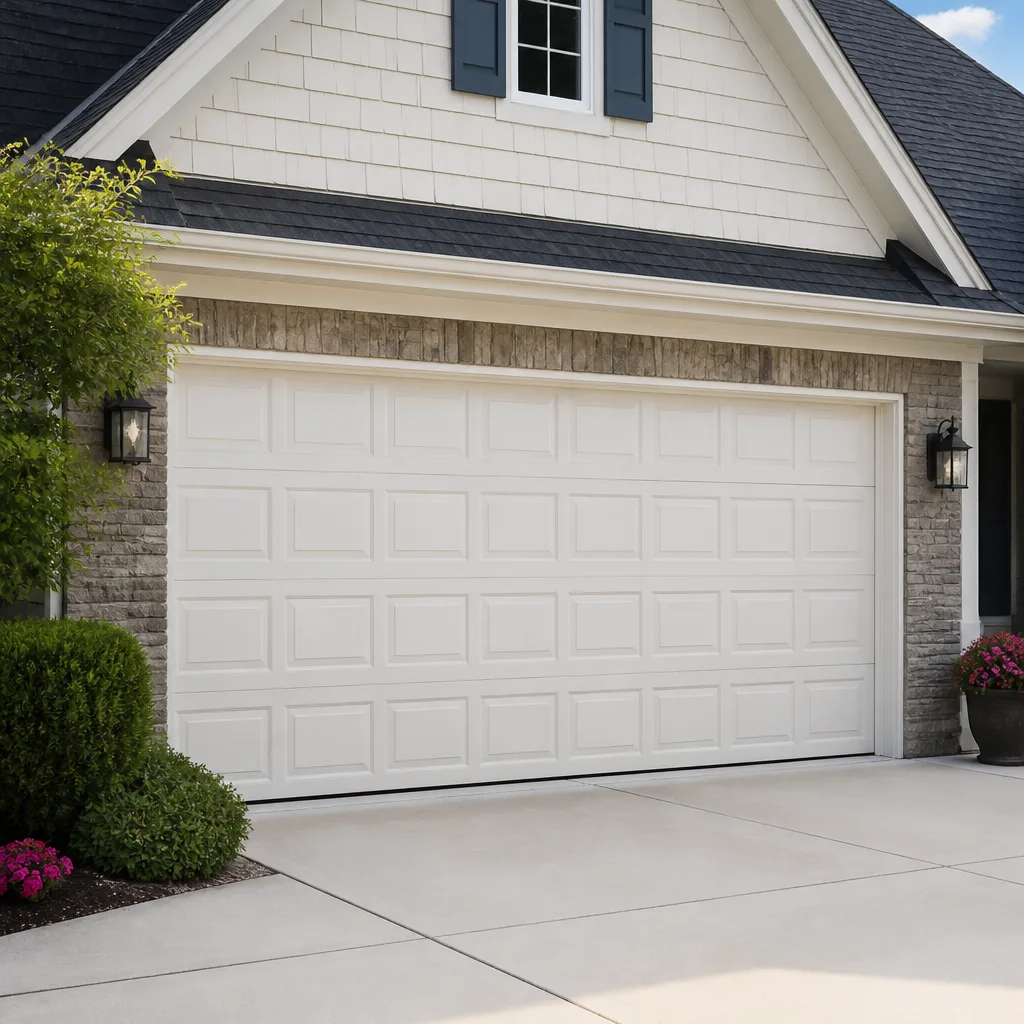 Raised-panel steel
 Carriage house
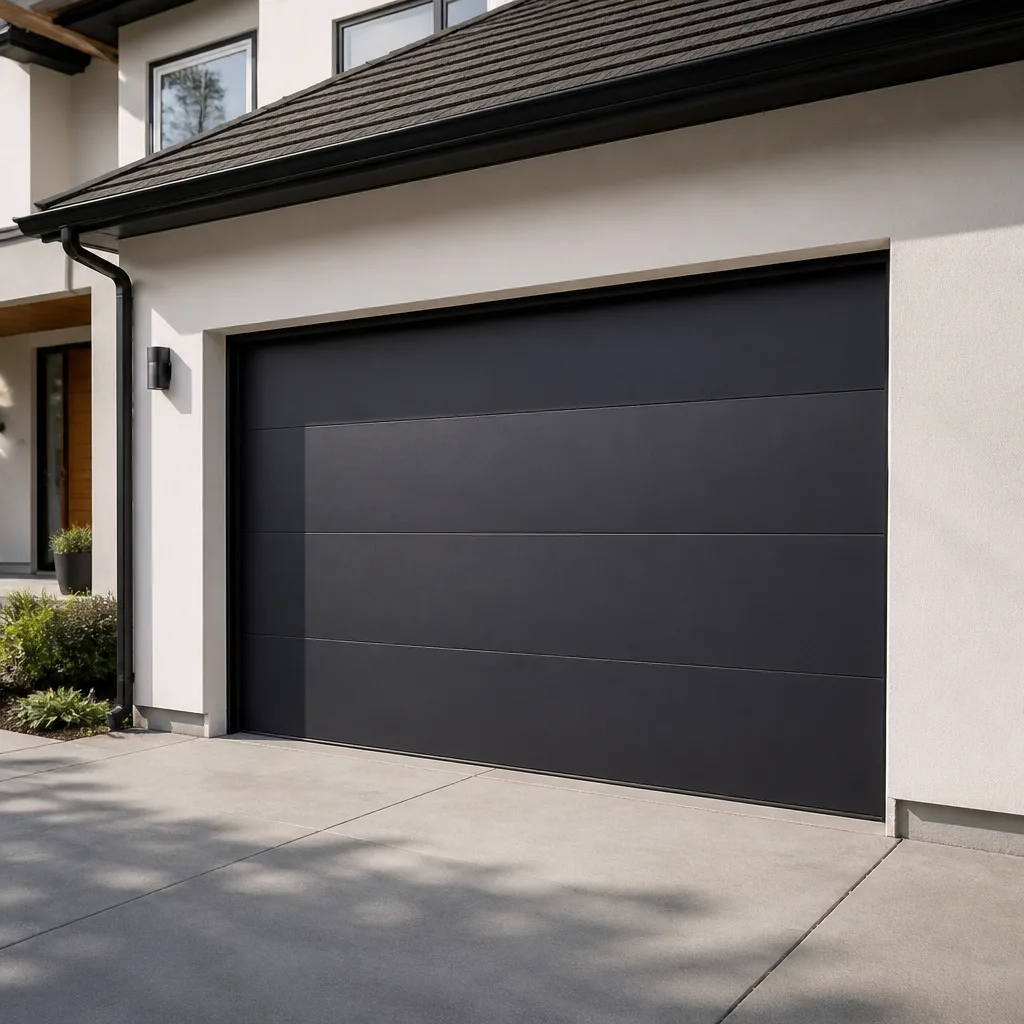 Modern flush
 Full-view glass
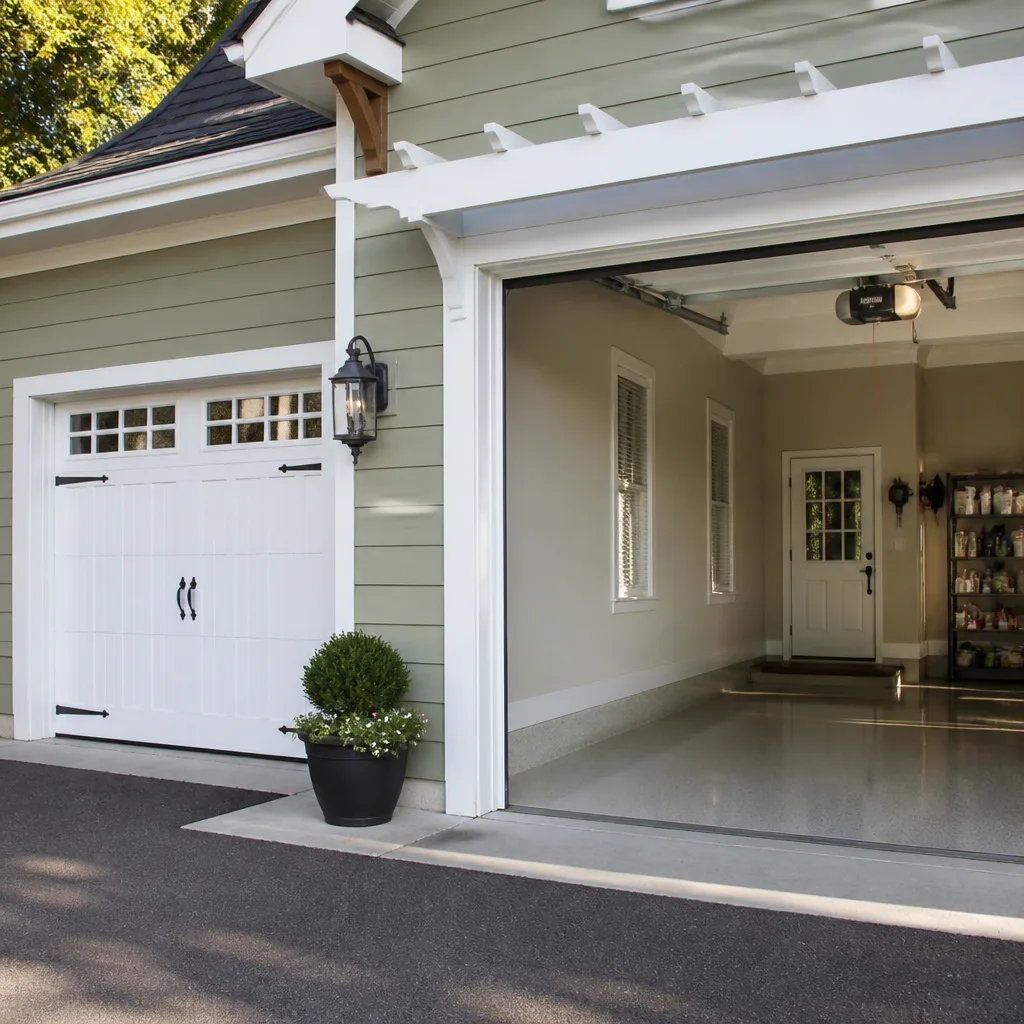 LiftMaster openers
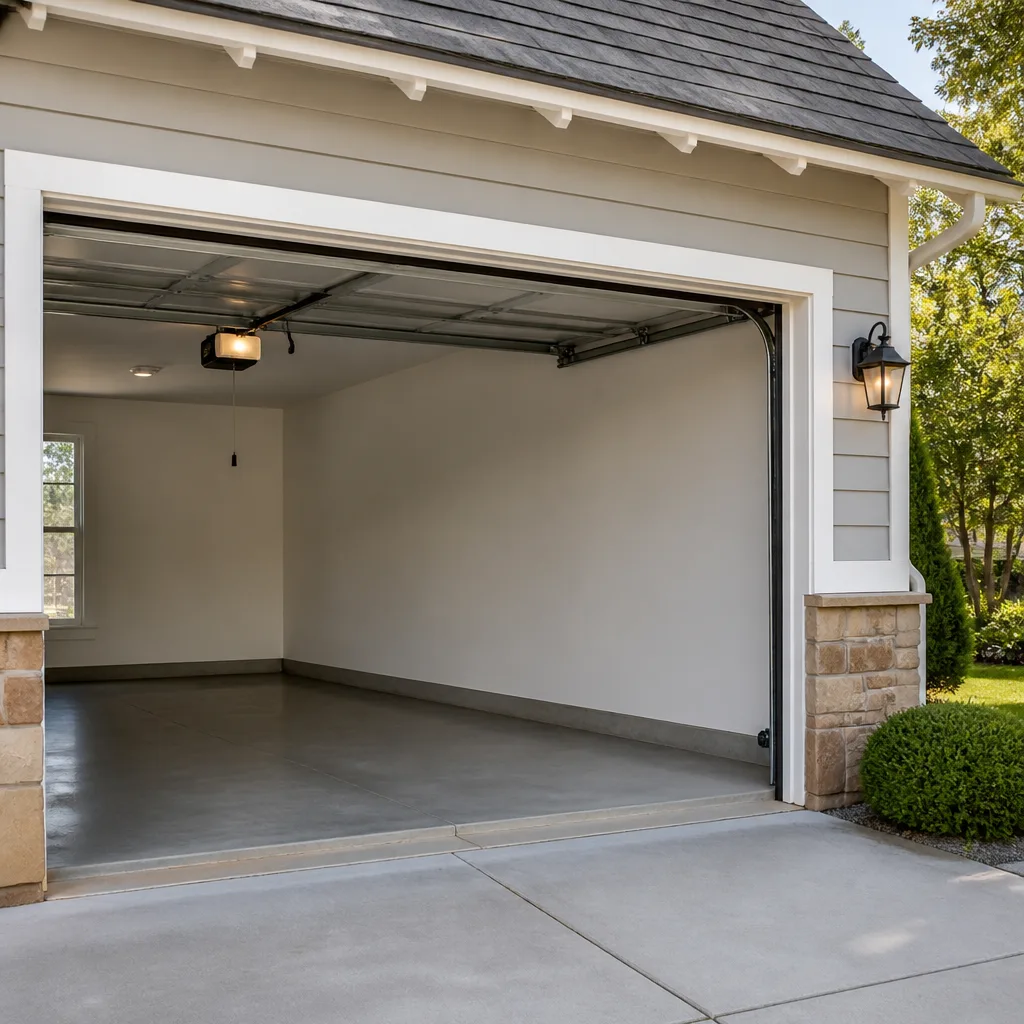 Chamberlain openers
Full 25-point door and opener safety check with every visit - springs, cables, rollers, tracks, and your LiftMaster or Chamberlain opener included
You get a price before we start. It does not change when the pro arrives.
Get your free estimateGarage Door Repair Maintenance Schedule: What to Do and When
The most expensive garage door repair we see – snapped torsion springs that take cables and drums with them – is almost always preceded by a door that felt slightly heavy for months. Not broken. Not loud. Just heavier than it used to be. That “slightly heavy” feeling is a measurable, testable condition, and a 90-second balance check catches it every time. Here’s the part most schedules get wrong: there’s no single yearly ritual that keeps every door healthy. A Clopay steel door with an extension spring setup wears differently than a Wayne Dalton torsion system, and a Chamberlain belt-drive opener has different maintenance points than a Genie chain drive. In this guide we’ll show you which tasks belong on a monthly, quarterly, or annual interval based on your actual equipment, how to read the cycle rating stamped on your springs to estimate the life you have left, and which seasonal triggers matter in Arvada’s freeze-thaw climate.
Quick Answer
A working garage door maintenance schedule is tiered, not annual. Do a visual inspection and sensor wipe every month, a balance-and-force check every quarter, and full lubrication, cable inspection, and spring cycle assessment once a year. Colorado’s freeze-thaw cycles add two seasonal inspections to the calendar: a post-winter check for torn bottom seals and weatherstripping, and a pre-summer check for UV cracking on rubber parts. If your door feels heavy when you lift it by hand, or the opener strains to raise it, schedule a professional inspection rather than waiting for the next interval.
Styles & brands we work with
- Raised-panel steel
- Carriage house
- Modern flush
- Full-view glass
- LiftMaster openers
- Chamberlain openers
Table of Contents
- What Needs Attention Every Month
- The Quarterly Balance and Force Test
- Annual Tasks: Lubrication, Cables, and Spring Life
- How to Read Your Spring’s Cycle Rating
- Lubrication: Which Product Goes Where
- Colorado’s Seasonal Maintenance Triggers
- How to Keep a Maintenance Log That Helps
- When a Task Belongs to a Professional
What Needs Attention Every Month
Monthly tasks are the cheap ones. They take ten minutes and they exist to catch small problems before they become invoice-sized ones. Your monthly routine is a look-and-listen pass, not a repair session.
- Eyeball the springs. Look for gaps, a stretched coil, or rust blooming on the wire. A torsion spring that’s starting to fail often shows a visible gap before it snaps. Extension springs should have safety cables running through them; if a cable is missing or hanging loose, that’s a call-us item.
- Wipe the safety sensors. The two photo-eye lenses near the floor on either side of the opening collect dust, cobwebs, and in Arvada, cottonwood fluff. A dry cloth once a month prevents most phantom “door won’t close” calls.
- Listen to the opener. A healthy opener is a smooth hum. Grinding, clicking, or a motor that sounds like it’s working harder than it used to is a signal, not background noise.
- Check the tracks by eye. Look for dents, debris, or a track that’s pulling away from the frame. Don’t bend anything back into place yourself: misaligned track is more dangerous than it looks.
- Test the door’s reversal. With the door closing, wave an object in front of the sensors. It should reverse. Do this monthly because it’s your only regular confirmation that the safety system is live.
That’s the whole monthly list. Anything that requires a ladder, a wrench, or loosening a bolt belongs on a different interval or with a technician.
Why Monthly Beats “Whenever It Breaks”
Most of the door problems we diagnose in Arvada were visible for weeks before the homeowner called. A roller wearing flat, a hinge with a dry pin, a sensor lens fogged with grime – none of these announce themselves. They just accumulate. Ten minutes a month is the difference between replacing a $4 part and replacing a whole spring assembly.
The Quarterly Balance and Force Test
Every three months, you want to know two things about your door: is it balanced, and is the opener doing more work than it should? Both are simple tests, and both point straight at the most common cause of premature spring failure.
The Balance Test
Disconnect the opener first. On most openers that’s a pull cord hanging from the trolley – pull it and the door comes off the motor drive. Then:
- Raise the door by hand to about halfway open.
- Let go.
- Watch what it does.
A properly balanced door stays where you put it. If it drifts down, the springs are losing tension or the door is out of balance. If it drops hard, stop using the opener until a technician looks at it. Reconnect the opener by running it until the trolley re-engages, or follow your model’s reconnection procedure – a Chamberlain or LiftMaster unit reengages by running the opener; a Genie may need the release cord tugged back into position.
The Force Adjustment Check
Modern openers have force limits set on the motor. If you’ve noticed the door reversing for no reason, or the opener struggling to close against a slight obstruction, the force setting may have drifted. On most units this is a dial or a set of adjustment screws on the back of the motor housing, and it’s not something to dial in by guesswork – improper force settings defeat the safety reversal system. Check that the door reverses on a light obstruction; if it doesn’t, or the motor sounds like it’s fighting the door, that’s a same-day call. Our garage door opener repair team diagnoses far more force-setting issues than actual motor failures.
Annual Tasks: Lubrication, Cables, and Spring Life
Once a year – we like early fall in Arvada, after the summer heat settles and before the first hard freeze – do the deeper pass. This is where most of the actual wear-and-tear knowledge lives.
- Full lubrication of the moving metal. Hinges, rollers (metal rollers only – see below), the torsion spring itself, and the bearing plates at either end of the shaft. A light coat, not a coat of grease. Excess attracts grit.
- Cable inspection. Look at both lift cables where they wind onto the drums. Frayed strands, kinked cable, or rust on the wire means the cable is closer to failure than you think. Cables are load-bearing and a snapped cable is genuinely dangerous – never handle one under tension yourself.
- Spring cycle assessment. Read the stamped number on the spring (more on this below) and compare it to how often your door has actually cycled. This is the single most useful predictive data point on the whole door.
- Weatherstripping and bottom seal. Look at the rubber seal on the bottom of the door and the perimeter stripping. Cracks, compression, or a seal that no longer touches the floor means water and cold air get in.
- Panel and hardware torque check. Bolts on the hinges and the track brackets loosen over time. Finger-tight plus a quarter turn is enough – don’t overdo it.
Do the annual list properly and you’ll catch most of the failures that would otherwise show up as a broken door on a Sunday morning.
How to Read Your Spring’s Cycle Rating
Most torsion springs in Arvada have a number stamped on the wire or the coil end: something like “10,000 cycles” or “20,000 cycles.” Most homeowners have never looked at it. That number, combined with how often your door opens and closes per day, tells you roughly how much life is left.
The Math
- Find the cycle rating. It’s stamped on most standard torsion springs. If you can’t find a stamp, a technician can read the wire gauge and coil dimensions and infer the rating.
- Count your daily cycles. One open plus one close is one cycle. A family that leaves and returns twice a day uses four cycles daily; a household where the door is a primary entry might use eight or more.
- Multiply for the year. Four cycles a day is about 1,460 a year. Eight cycles is around 2,900.
- Divide the rated cycles by annual usage. A 10,000-cycle spring at 1,460 cycles a year is roughly seven years of service. The same spring at 2,900 cycles a year is under four.
Here’s what the math actually tells you: two doors of identical age on the same street in Arvada can have completely different spring life left, because one is a primary vehicle entry and the other is used twice a day. Age is the wrong variable. Cycles are the right one.
When a spring gets past roughly 80% of its rated cycles, start planning for replacement rather than waiting for the snap. A snapped torsion spring is loud, it disables the door, and it often damages cables and drums on the way out. Replacing a spring on your schedule is a different job than replacing a spring plus cables plus drums.
Lubrication: Which Product Goes Where
You’d be surprised how often the wrong lubricant causes a problem. The wrong product on the wrong component can attract grit into the tracks, gum up plastic parts, or worst of all, void the warranty on a newer Chamberlain or Genie opener. Here’s the actual map:
- White lithium grease – torsion springs, bearing plates, and the shaft. It clings, it doesn’t migrate, and it holds up to temperature swings.
- Silicone spray – the vertical tracks, the bottom seal, and any rubber weatherstripping. It keeps rubber supple without attracting grit.
- Light oil – hinge pins and roller stems, applied sparingly with a few drops rather than a spray.
- Nothing at all – the opener rail (unless the manual specifically calls for it), the opener motor housing, nylon rollers, and any plastic bushings. Grease on those parts attracts dirt into the mechanism.
What Voids an Opener Warranty
Opener manufacturers are specific about which lubricants are approved, and Chamberlain, LiftMaster, and Genie manuals generally specify a light lithium or silicone product for the drive components. Spraying the wrong thing into the logic board area or the gear housing is a fast route to a warranty dispute. If you’re not sure what your model wants, the manual is the authority, and a technician who works on these brands regularly will know without checking. We’ve been trained across eight of the most-installed residential brands, so we’re not learning your opener on the job.
One rule that forestalls most problems: never use WD-40 as a door lubricant. It’s a solvent and water displacer, not a long-term lubricant, and it strips the oil it finds without replacing it.
Colorado’s Seasonal Maintenance Triggers
Arvada’s freeze-thaw pattern does things to garage doors that a homeowner in a mild-climate city never sees. Two seasonal inspections matter here, and neither belongs on a generic “once a year” schedule.
Post-Winter: The Freeze Damage Check
After the last hard freeze in spring, walk the door and look specifically for freeze-related wear:
- Bottom seal tear. Water that seeps under the door and freezes overnight can tear or distort the bottom rubber. A torn seal lets water under the door next season and starts a cycle.
- Weatherstripping compression. The perimeter rubber compresses over winter and stops sealing. If you can see daylight at the bottom corners, it needs replacing.
- Hardware rust. Hinge springs, bolts, and track brackets rust faster in a wet-cold cycle. Not a functional problem yet if it’s surface rust, but worth a spot of oil.
- Panel separation. Expansion and contraction over a Colorado winter can loosen the panel joints on a sectional door. A visual look along the seams catches it early.
Pre-Summer: The UV Check
Colorado’s high-altitude summer sunlight is hard on rubber. Before the hot months, look at the bottom seal, the perimeter weatherstripping, and any rubber components on the opener. UV cracking shows up first on the top surface of the bottom seal and along the edges of the perimeter rubber. Replacement rubber – Clopay and Amarr both make weatherstrip kits for their door profiles – is a small job if caught early and a slow leak if ignored.
Between the two seasonal checks, the Arvada calendar looks like this: post-winter inspection in late March or early April, annual full pass in early fall, pre-summer UV check in May. The quarterly and monthly intervals fit inside those without conflict.
How to Keep a Maintenance Log That Helps
A maintenance log isn’t a chore – it’s the difference between a technician starting from diagnostics and a technician starting from guesswork. And on newer openers, a log can decide whether a warranty claim gets honored. Here’s what actually helps:
- Date and task. “March 15: balance test, passed.” “October 3: full lube, spring cycle estimate 12,000 used.” Two lines each.
- Cycles per day. Log it once a year. This is what lets a technician back-calculate spring life on your next visit.
- Part replacements with brand and model. If a roller was replaced, write down which one. Nylon and steel rollers have different service intervals, and a technician needs to know what’s on the door now.
- Symptoms even if they resolved. “Door stuck once, cleared on its own, February 8.” That’s not a resolved issue – it’s data. Note it.
- Opener service history. Battery replacements, force adjustments, remote reprogramming. Newer openers log a service history internally too, and a homeowner log helps a technician cross-check what the unit recorded.
Why Warranty Claims Care
Manufacturer warranties on openers usually require that the product was installed and maintained per the manual. A maintenance log – even a handwritten one – is your record of that. On a Chamberlain, LiftMaster, or Genie unit still inside its warranty window, an undocumented opener failure can be a harder claim than one backed by dates and task listings. It’s not a courtroom, it’s just evidence.
When a Task Belongs to a Professional
Some of the list above is homeowner work. Some of it, honestly, is not. High-tension torsion springs, lift cables under load, track realignment on a door that’s off the rails, and anything that requires adjusting the opener’s force settings – all of those carry real injury risk, and none of them reward DIY effort with a better outcome. If you hear the spring twang, or the door drops instead of staying open when you test it, stop testing and call.
The other case for calling a professional is simpler: when you don’t know what you’re looking at. A door that’s making a new noise, an opener that reverses when nothing’s in the way, a bottom seal that’s tearing every winter – these are all symptoms that need a trained eye. We work on Chamberlain, LiftMaster, Genie, Craftsman, Clopay, Amarr, Wayne Dalton, and Raynor equipment, so we don’t spend the visit identifying your system. We start diagnosing it.
Common Mistakes to Avoid
- Treating maintenance as an annual event. Lubricating the door once a year and calling it done misses the monthly sensor wipe and the quarterly balance test – the two checks that catch the failures an annual pass won’t.
- Using WD-40 as garage door lubricant. It’s a solvent, it drives out existing lubricant, and it doesn’t replace it. Your hinges will wear faster within a few months.
- Greasing the opener rail on every model. Most Chamberlain and LiftMaster rail systems don’t call for it, and greasing where the manual doesn’t specify is a fast way to attract grit into the drive.
- Overtightening track brackets. Over-torquing a loose track bracket can pull the track out of true. Tighten to snug, no more.
- Bending a track back into place by hand. Track alignment is a load issue. A door operating on a misaligned track is a door that can come off the rails.
- Ignoring the bottom seal freeze damage. Colorado freeze-thaw tears bottom seals over a single winter. A torn seal is invisible from inside the car but lets water under the door every time it rains.
- Not testing reversal after every sensor wipe. Sensors that get wiped but never tested can come out of alignment from the same wipe. Test after touching.
- Waiting for a spring to snap instead of checking cycle count. Reading the stamped rating and doing the cycles-per-day math takes five minutes and tells you the replacement window before it fails.
See the difference
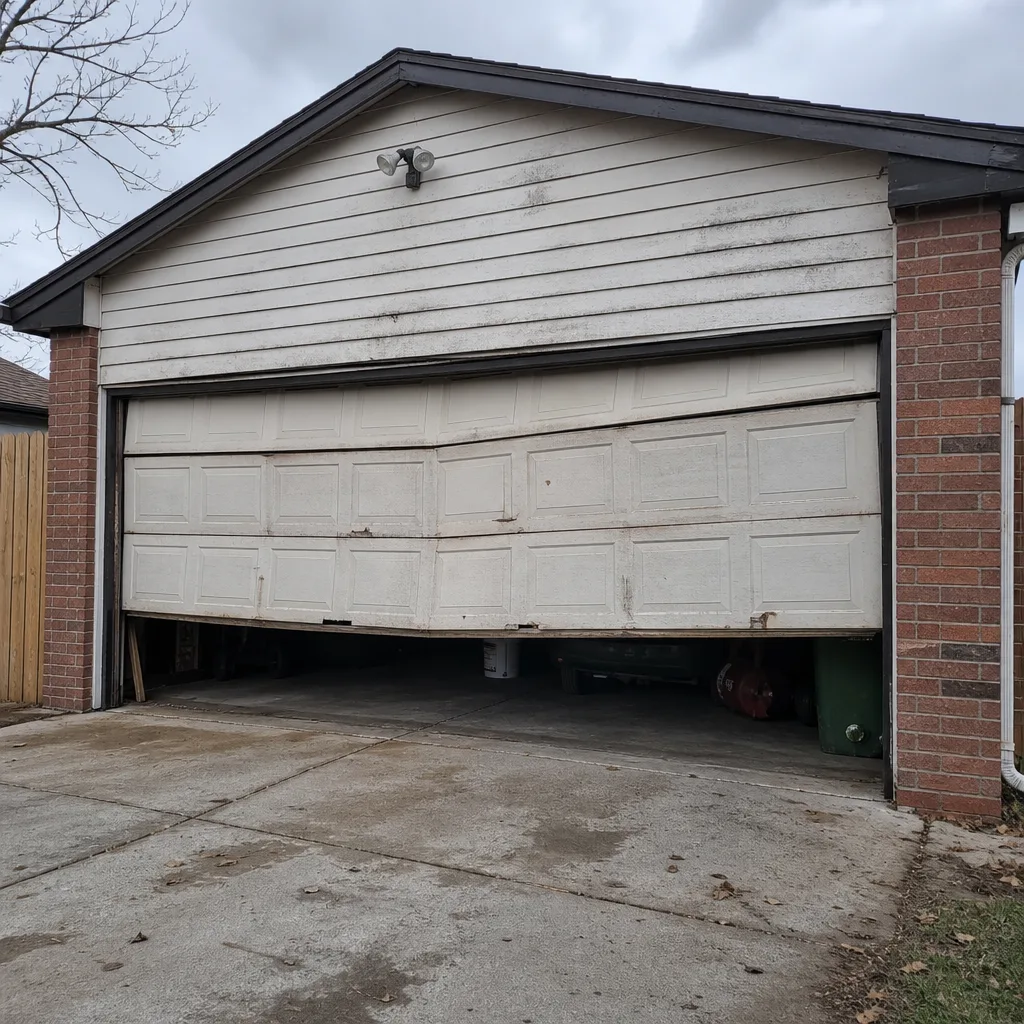 Before
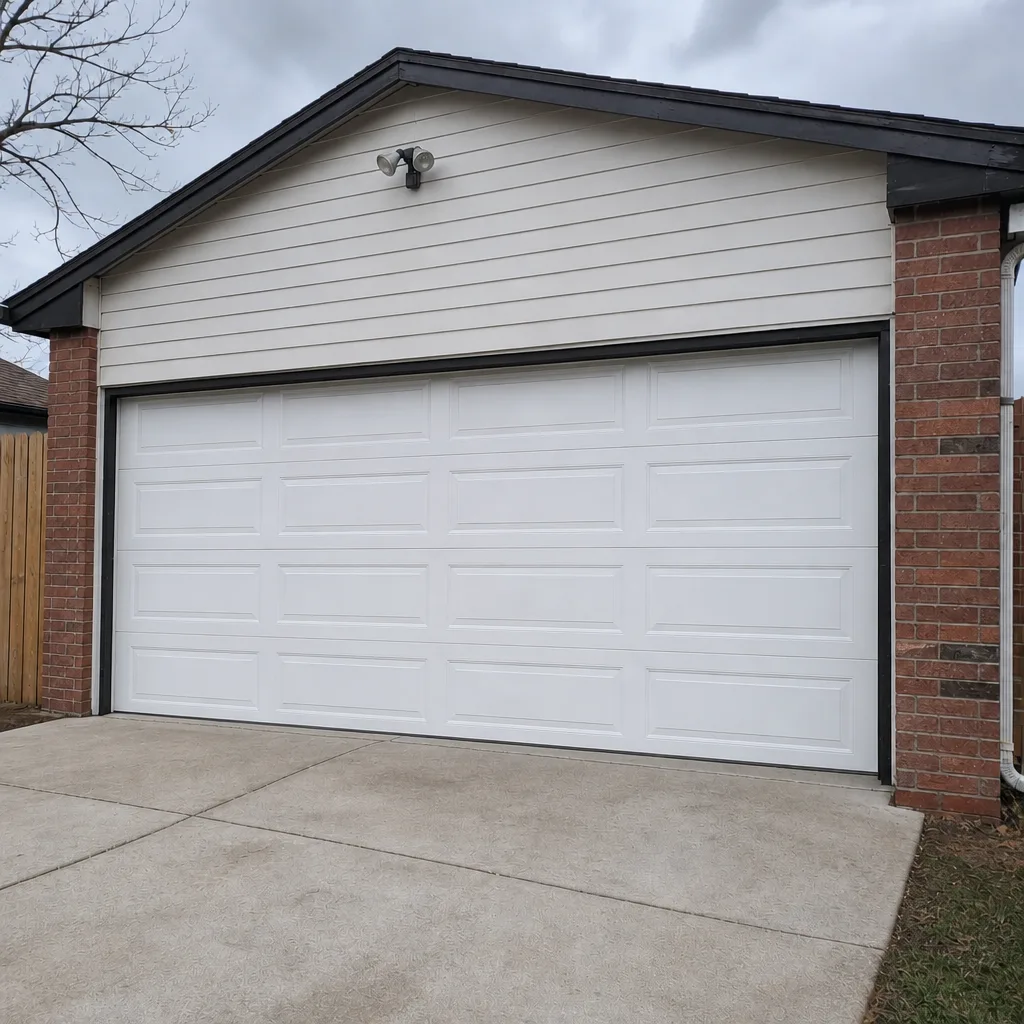 After
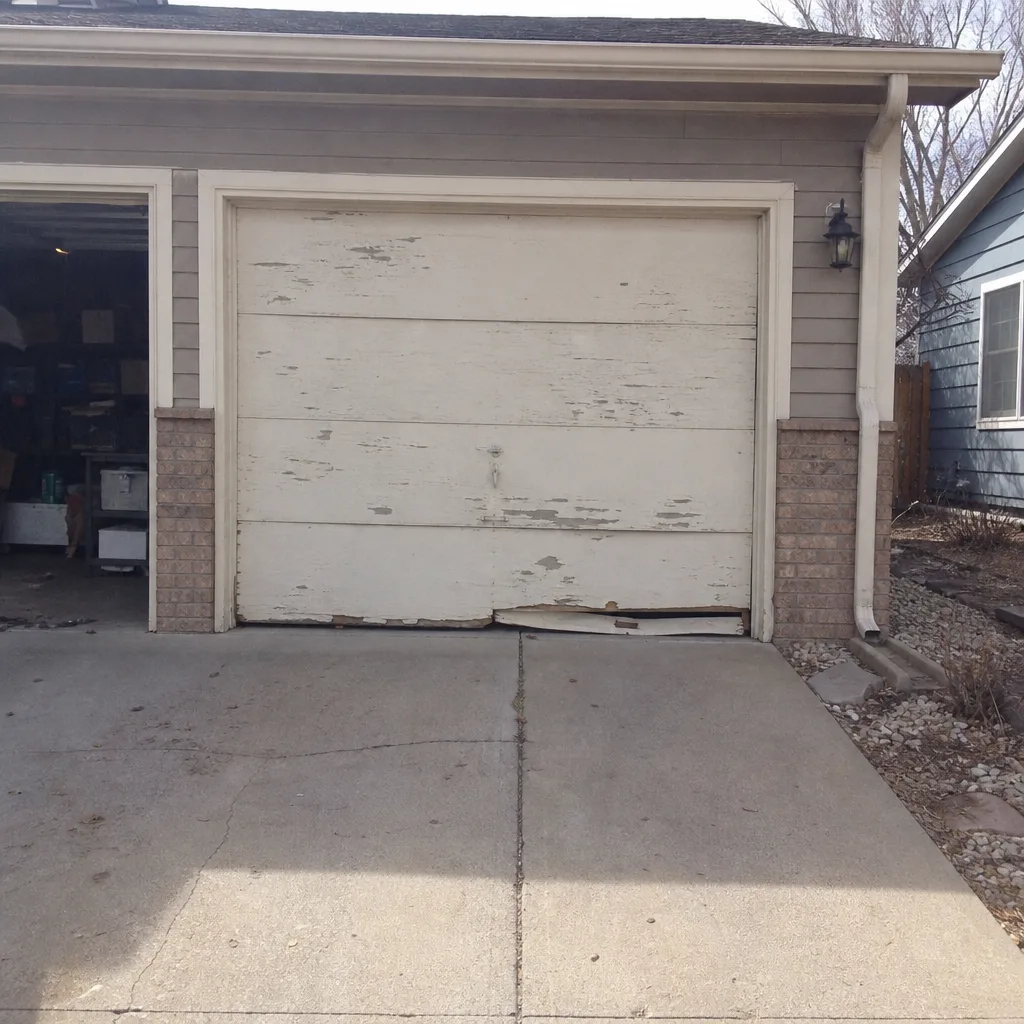 Before
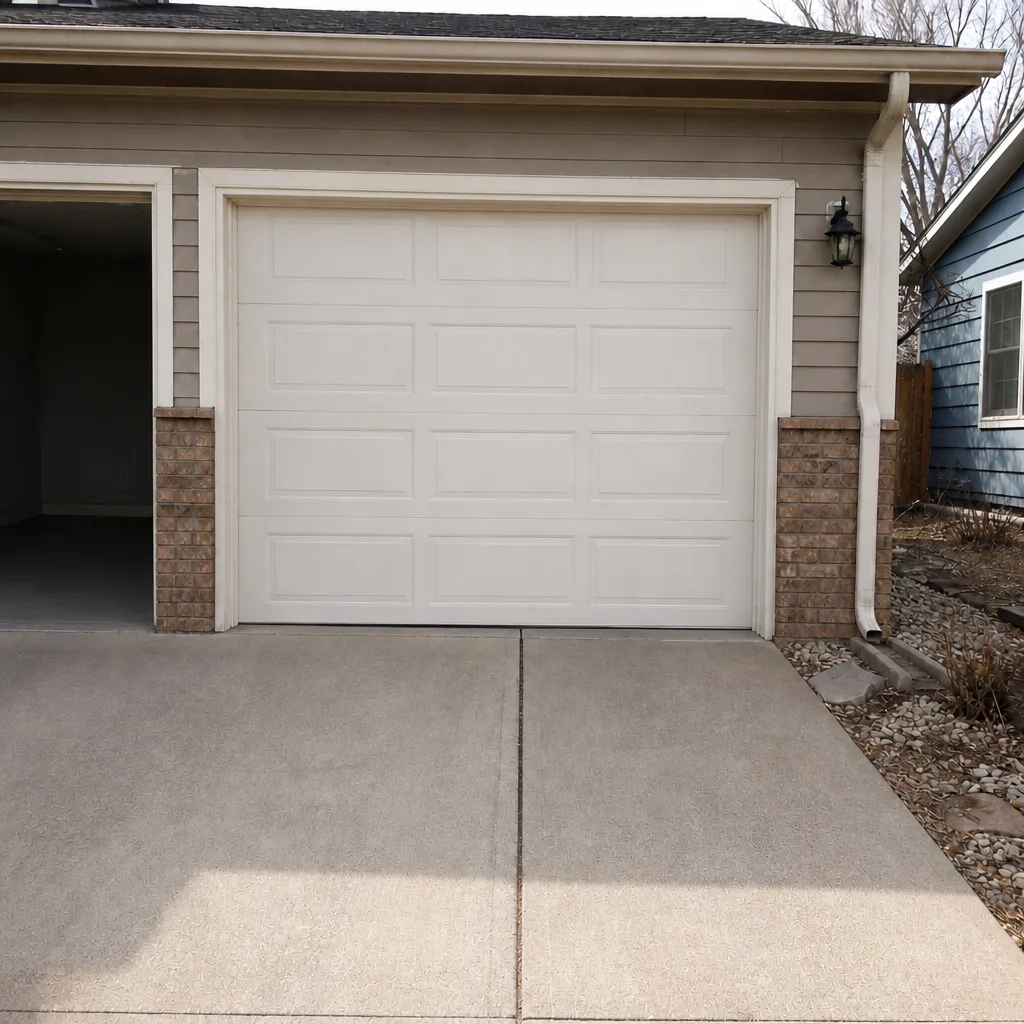 After
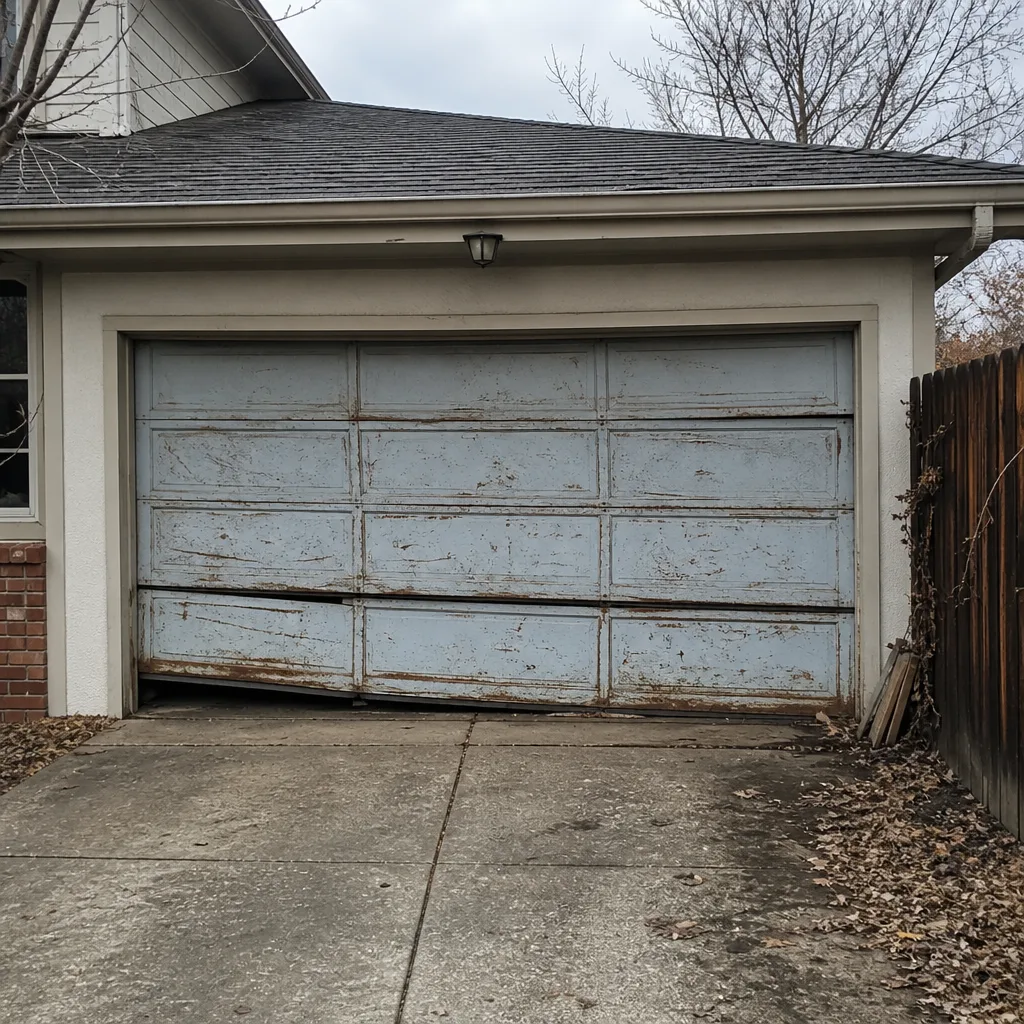 Before
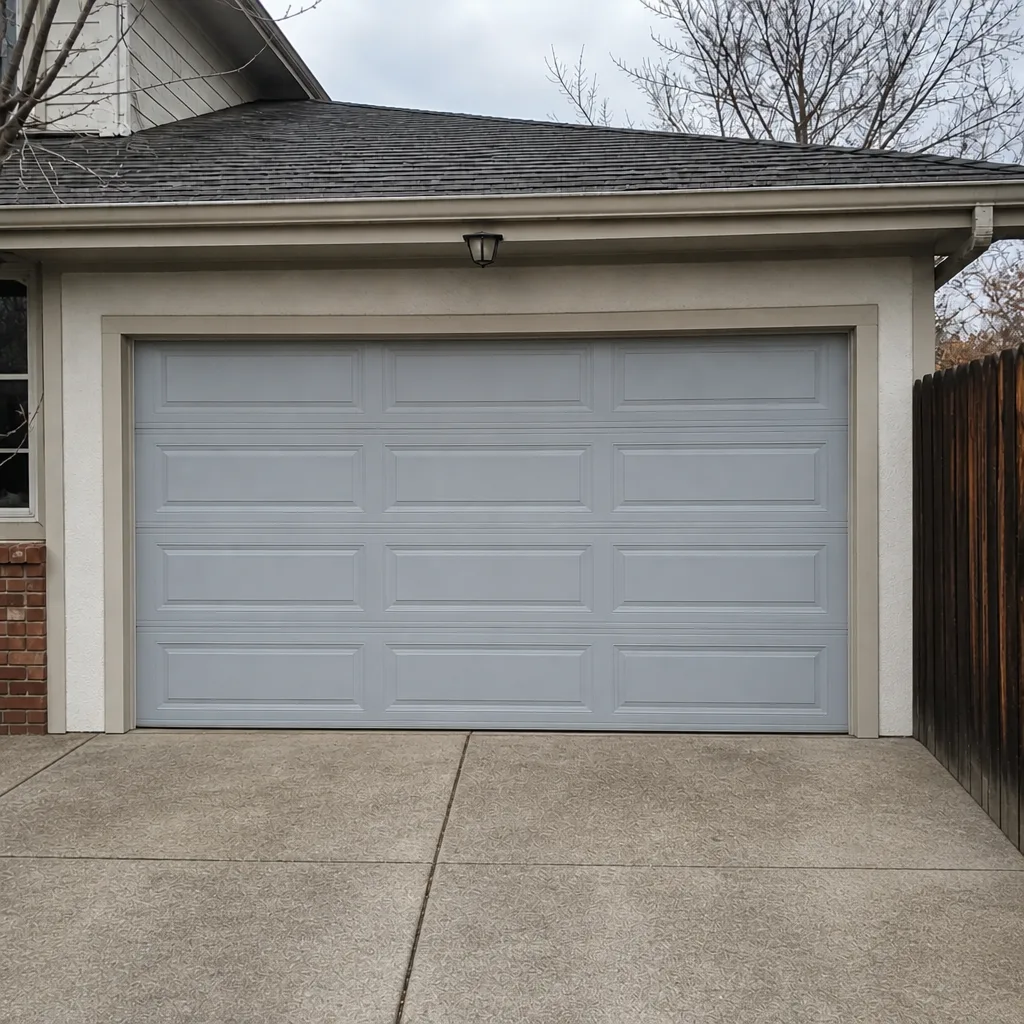 After
When to Call a Professional
The maintenance schedule above is designed to keep a healthy door healthy. It’s not a repair plan. Call us if any of these show up: the door feels noticeably heavier in the balance test, the opener reverses with no obstruction, the door won’t stay open at the halfway point, a spring shows a visible gap or has snapped, a cable is frayed or kinked, or the door has come off the track. Track and cable issues are genuinely dangerous and shouldn’t be handled by anyone who isn’t trained. Arvada Garage Door Service offers free estimates in Arvada – call (866) 984-9695. We answer 24/7. Fast dispatch from 7am to 7pm, Sunday through Friday. Our technicians have up to 8 years of experience, so there’s no diagnostic learning curve on your system. We handle garage door repair and full replacement if the door has reached the end of its service life – and we’ll tell you honestly which one you actually need.
Frequently Asked Questions
Every twelve months for a full service, with monthly visual checks and quarterly balance tests in between. The Arvada-specific additions are a post-winter check in late March or early April for freeze damage and a pre-summer check in May for UV degradation on rubber components. The combination handles Colorado’s freeze-thaw cycle and high-altitude sun without over-servicing the door.
Yes, within a useful window. Most torsion springs are stamped with a cycle rating, and a 90-second balance test tells you when the spring has lost enough tension to be a risk. The point of the balance test is to catch the “slightly heavy” condition that precedes most snap failures, not to predict a date.
White lithium grease on the torsion spring, bearing plates, and shaft; silicone spray on the tracks, bottom seal, and weatherstripping; light oil on hinge pins and roller stems. Nothing on the opener rail unless your manual specifies it, and never WD-40, which is a solvent and not a long-term lubricant. If you’re not sure what your Chamberlain, Genie, or LiftMaster opener calls for, the manual is the authority – we can also check on a service visit.
Check the cycle rating stamped on the spring and divide it by your annual cycle count. Once you’re past roughly 80% of the rated cycles, the spring is in its replacement window. A balance test showing drift or a heavy door is the practical confirmation. Replacing a spring on your schedule is a repair; replacing a snapped spring plus damaged cables and drums is a much bigger job.
Not necessarily, but you should inspect it after every winter. Arvada’s freeze-thaw tears bottom seals quickly, and UV exposure cracks the perimeter rubber over the summer. Replace when the seal no longer touches the floor or shows visible cracking – not on a fixed yearly schedule.
Yes. Manufacturers such as Chamberlain, LiftMaster, and Genie expect the opener to be maintained per the manual, and a dated log of service tasks, part replacements, and symptoms is your evidence of that. It’s not a courtroom standard – it’s just a record. Two lines per task is enough.
The Bottom Line
The right garage door maintenance schedule is not a yearly ritual – it’s a tiered calendar matched to your door’s actual wear rate. Monthly checks catch the cheap problems; quarterly balance tests catch the expensive ones before they fail; annual spring-cycle assessment tells you when the next replacement is due. Arvada’s freeze-thaw and high-altitude sun add two seasonal triggers – post-winter and pre-summer – to the schedule. Keep a log. Use the right lubricant on the right part. And do the balance test monthly, because a heavy door is a testable condition, not a hunch. When the door tells you something’s wrong, listen, and call us.
For a free estimate on your garage door’s maintenance or repair in Arvada, call (866) 984-9695. We answer 24/7. Fast dispatch from 7am to 7pm, Sunday through Friday. From opener to panel, this is all we do.
Written by the team at Arvada Garage Door Service.